Category
CrashPlan Entra ID backup and recovery
Who it’s for
Enterprise and institutional IT organizations using Microsoft Entra ID
Product model
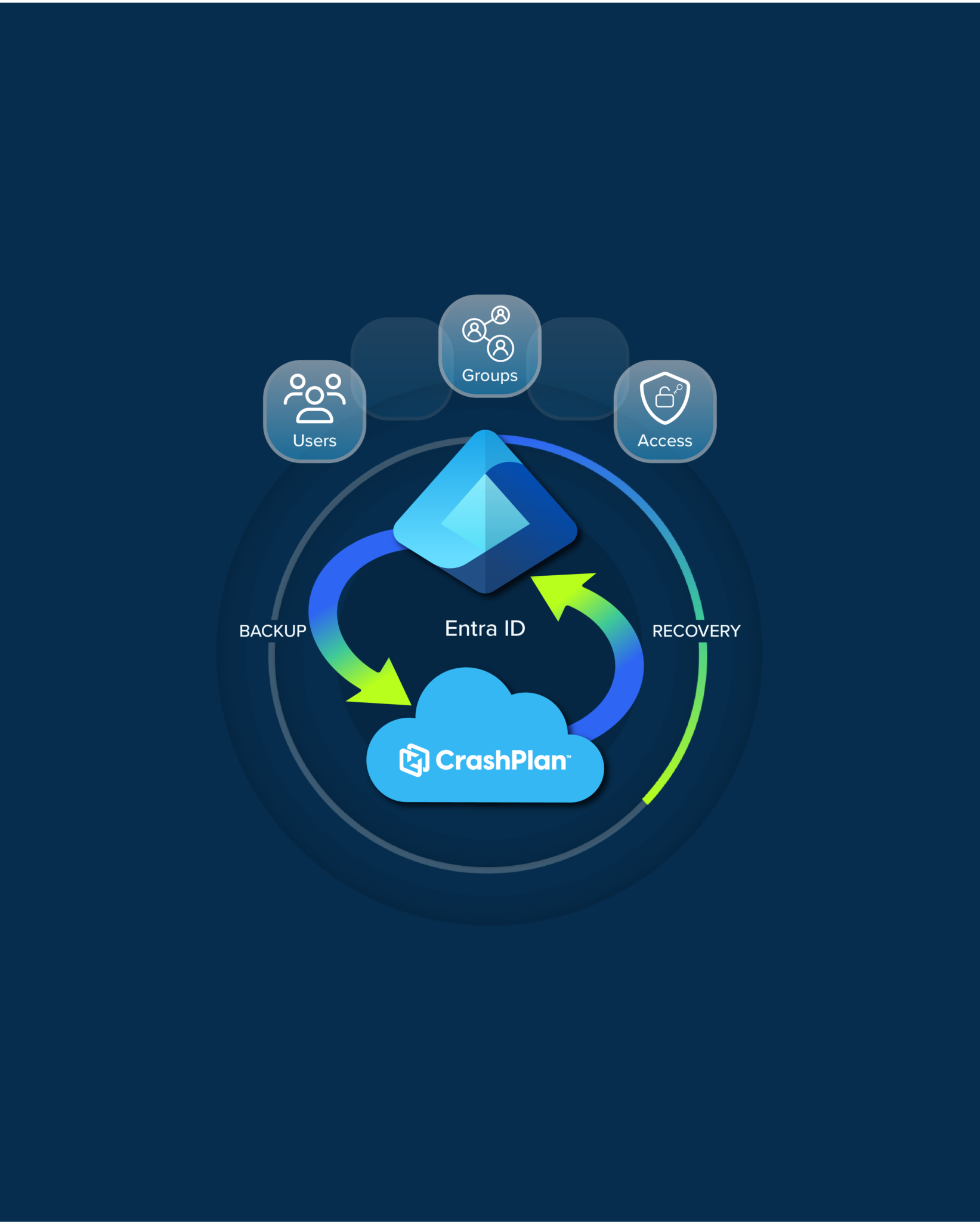
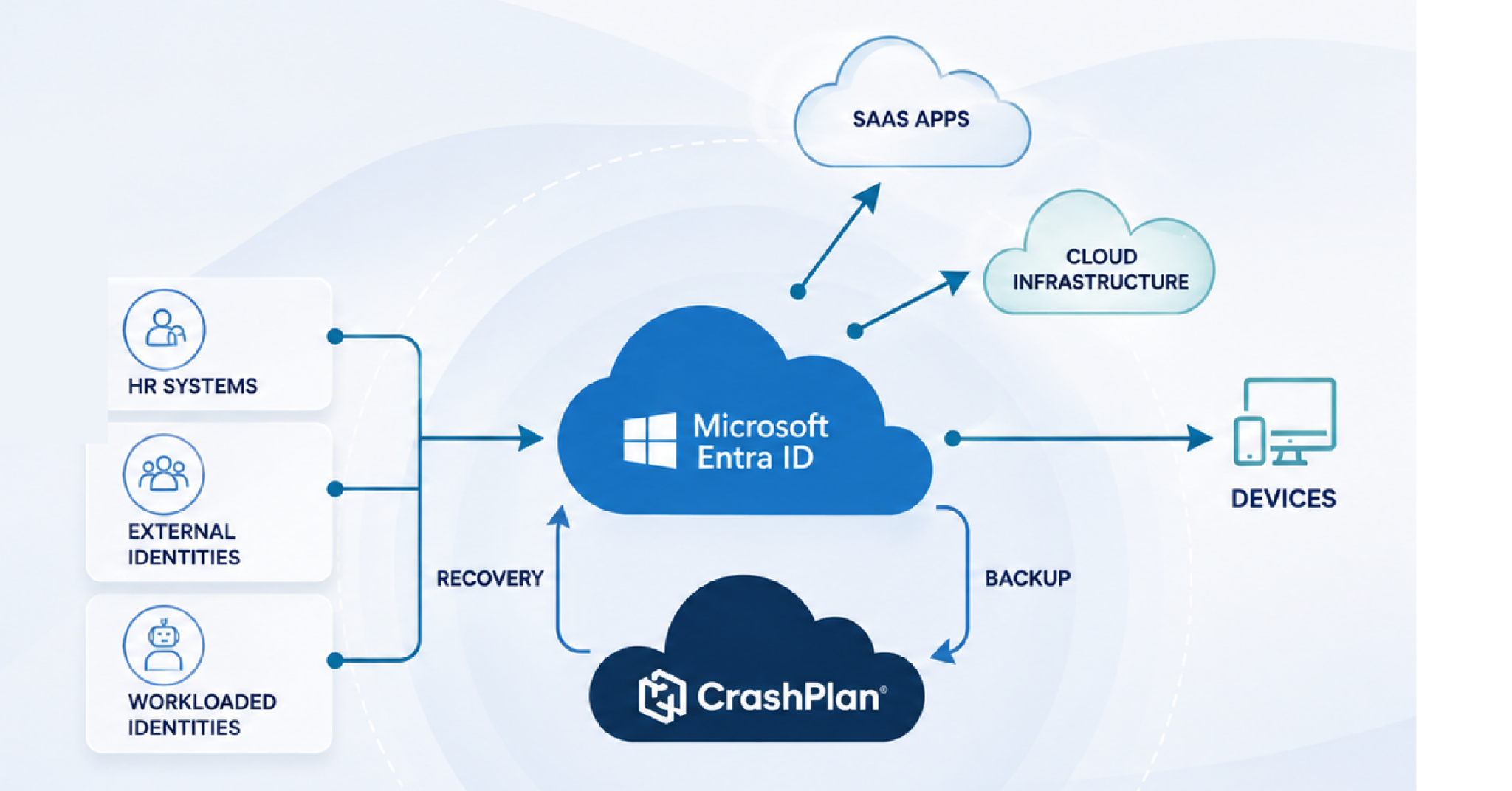
Entra ID backup and recovery is included with CrashPlan Microsoft 365 backup and recovery
Licensing and included storage
Entra ID backup and recovery is included with CrashPlan’s Microsoft 365 backup and recovery solution, which is licensed per user with 50 GB of CrashPlan-managed pooled storage per user included; customer-managed storage options are also available
Platform hosting
CrashPlan is hosted in Microsoft Azure
CrashPlan-managed storage
Microsoft Azure or CrashPlan proprietary data centers
Customer-managed storage
Microsoft Azure, Amazon Web Services, Wasabi, Backblaze, and supported S3-compatible storage
Backup method
Automatic, incremental backups to cloud storage, with configurable scheduling and retention
Protected identity objects
Users, groups and memberships, administrative roles and role assignments, service principals, enterprise applications, app registrations, app permissions, and more
Protected security objects
Conditional Access policies, named locations, authentication methods and strengths, MFA configuration references, authorization policies, and more
Restore types
Dependency-aware recovery of single objects and attributes, multiple objects and attributes, or bulk restoration
Point-in-time recovery
Point-in-time recovery of objects, attributes, policies, and relationships
Historical comparison
Compare current Entra ID state with a backup, or compare historical backups, to identify changes
Recovery controls
Restore preview, permission validation, approval controls for high-risk restores, conflict handling, and post-restore validation
Administration
Role-based access control, delegated administration, granular search, configurable reports, and alerts
Encryption
AES-256 encryption at rest and TLS 1.2 or later in transit
Encryption-key control
Customer-controlled encryption keys
Backup security
Immutable backup copies
Compliance and governance
Audit trails, storage-location choice, policy-based retention, and defensible deletion