AI is increasingly embedded in core workflows—summarizing sensitive data, recommending actions, automating steps, and interacting with systems of record. As that happens, the risk conversation tends to change in a predictable way: the most important questions move from “Could something happen?” to “How would we know, how fast could we contain it, and what would we need to prove after the fact?”
Based on our recent discussions and the consensus emerging among senior leadership, including security and product, these five developments will shape the enterprise threat landscape in 2026.
1) Lower-noise attacks will matter more than high-drama events
When AI helps adversaries scale reconnaissance and tailor actions to specific environments, the risk is not only “bigger attacks.” It is a higher likelihood of smaller, better-targeted actions that resemble normal activity: selective data access, incremental privilege use, and policy-compliant pathways exploited in policy-inconsistent ways.
Why leaders should care: This pushes organizations toward a different detection and response posture; less reliance on obvious spikes or single “red alert” moments, and more on establishing intent, context, and sequence after the fact.
What changes at the executive level: The question becomes whether your organization can reliably distinguish legitimate work from subtle misuse in critical workflows, and whether you can confidently reconstruct what happened during an incident.
2) Resilience is increasingly defined by the integrity of recoverable data
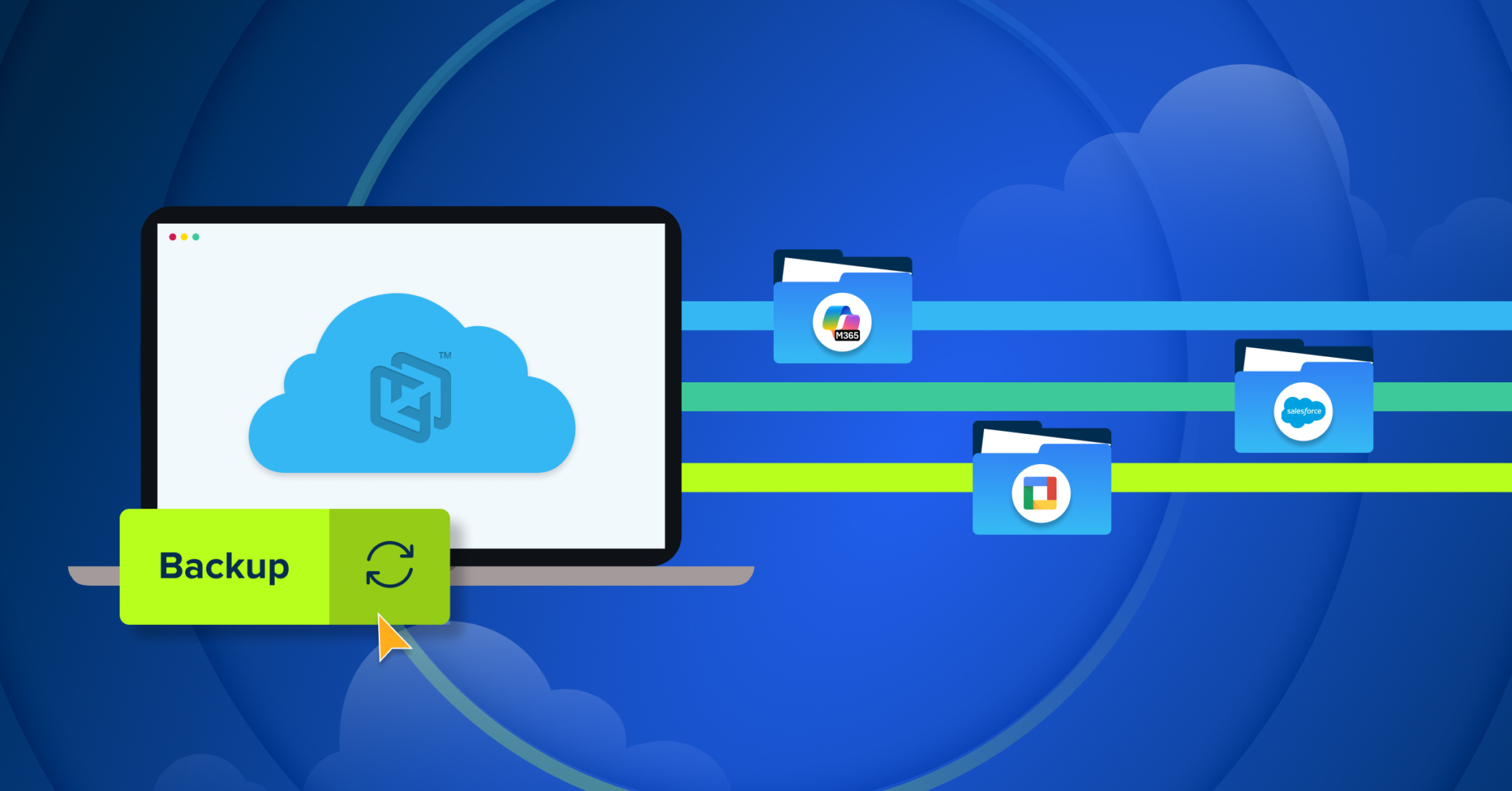
More organizations are distributing systems across cloud environments and SaaS platforms. That can improve availability, but it can also create uneven attention across “production,” “backup,” “archive,” and “long-term retention.” In many enterprises, the data that matters most in an emergency is not what’s currently running; it is what you can restore, trust, and explain.
Why leaders should care: In incident scenarios, the hardest questions are often integrity questions: Do we know the recovery point is clean? Can we prove what changed and when? Are we restoring “good data” or simply restoring a corrupted state more quickly?
What changes at the executive level: Resilience stops being a downstream IT topic and becomes a core element of operational assurance, closely tied to business continuity commitments, regulatory exposure, and customer trust.
3) Agentic automation changes the shape of access and accountability
As organizations move from AI that “recommends” to AI that “does,” they introduce a new class of operational actor: software that can initiate steps, retrieve information, and execute actions across systems. Even well-designed agentic workflows can create complexity in three areas: permission boundaries, decision traceability, and exception handling.
Why leaders should care: When an automated agent takes action, leadership needs clarity on who is accountable for the action, what controls govern it, and what evidence exists to support audit, investigation, or customer explanation.
What changes at the executive level: The governance model matters as much as the technology. The practical leadership question is whether agentic systems have a clear chain of authority, a record of decisions and actions, and defined constraints that align with policy, not just engineering intent.
4) Training and tuning data becomes a high-value enterprise asset
Organizations often focus on model selection and performance. But as AI becomes operational, the durability and trustworthiness of the underlying data—training corpora, tuning sets, prompts, outputs, and feedback loops—can become a more significant dependency than the model itself.
Why leaders should care: If critical AI-dependent workflows are influenced by corrupted, incomplete, or poorly governed data, the result may be widespread inconsistency that looks like “business process failure” rather than a discrete security incident.
What changes at the executive level: Data stewardship expands to include AI interaction records and lifecycle governance. Leaders should assume they will increasingly be asked to demonstrate: what data influenced a system, how it was controlled, and what evidence exists for oversight.
5) Identity assurance will be pressured by better impersonation at scale
Identity risk is not new, and biometrics are not “broken.” But AI-driven impersonation, meaning voice, video, and synthetic identity, creates more frequent gray-area events: interactions that look authentic enough to pass initial scrutiny, especially in high-velocity workflows (approvals, vendor changes, access requests, financial authorizations).
Why leaders should care: The risk isn’t limited to authentication; it extends into process integrity—how approvals happen, how exceptions are handled, and how an organization verifies intent when the interaction channel itself can be convincingly simulated.
What changes at the executive level: Identity strategy increasingly becomes a business process question: where the organization needs stronger verification, where friction is acceptable, and what “high-consequence actions” require additional assurance.
What this means for C-suite alignment
As AI becomes more operational, resilience and governance become more central, not because the sky is falling, but because accountability, auditability, and recovery confidence become harder to achieve by default.
Here are five questions leaders should be asking now:
- Where do we rely on AI for high-consequence decisions or actions today, and where will that expand in 2026?
- If a critical workflow produced the wrong outcome, could we trace the inputs, decisions, and actions that led to it?
- Do we have recovery confidence, not just recovery capability, for our most important data and processes?
- Which actions in our business (financial, access, customer-impacting) require stronger verification of intent as impersonation improves?
- Who is accountable for governance of operational AI (policy, oversight, audit evidence), and is that accountability reflected in our operating model?
Looking ahead
The most important change is not simply “new threats.” It is the growing interconnectedness of AI with core operations that means security, resilience, and governance increasingly determine whether AI adoption strengthens performance or introduces avoidable fragility. Organizations that can make AI-driven work auditable, recoverable, and explainable will be better positioned to scale adoption with confidence.
About the Author